According to the draft, in the northeastern states the threshold is at Rs 500,000.
The all-powerful GST Council on Friday decided to charge food delivery platforms such as Swiggy and Zomato a tax even as it extended concessional tax rates on certain COVID-19 drugs by three months till December 31. The Council, which comprises the Union finance minister and her state counterparts, decided to continue keeping petrol and diesel out of the GST purview as subsuming the current excise duty and VAT into one national rate would impact revenues. Briefing reporters on the decisions taken by the Council at a meeting here, Union Finance Minister Nirmala Sitharaman said GST has been exempted on muscular atrophy drugs like Zolgensma and Viltepso, which cost crores of rupees.

The Centre has turned down the proposal of the empowered group of state finance ministers to keep alcohol out of goods and services tax.
GST Council extends anti-profiteering authority's tenure, sends rate cut on EVs to fitment panel and also extended the date for filing annual returns under the GST by two months to August 30.
Seven of the meetings will be held in late November or early December at the finance ministry, as is the norm.
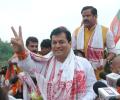
Following passage of the Constitution Bill, 2014, Dass and Finance Minister Himanta Biswa Sarma, who introduced it in the House, exchanged sweets.
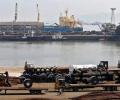
Companies are worried that any staggered roll-out of GST could result in cash flow issues with businesses not able claim tax credit due to breakage in the chain

The largest challenge for the gigantic exercise between the Centre and the 29 states was to keep the latter interested over the years.
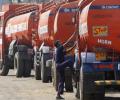
While the Centre is criticised for not cutting excise duty on petroleum products, it is the states which gain more from the rise in their prices

Farmer representatives and agricultural stakeholders urged the government to provide cheaper long-term credit, implement lower taxes, and double the PM-KISAN income support during a comprehensive pre-budget consultation with Finance Minister Nirmala Sitharaman on Saturday. The two-hour meeting saw a detailed discussion of proposals, aimed at addressing multiple challenges in the agricultural sector, with key demands focusing on financial relief, market reforms, and strategic investments.
Six years after the rollout of the biggest indirect tax reform in India, Goods and Services Tax (GST) revenue of Rs 1.5 lakh crore every month has become a new normal and tax officers are focusing on dealing with fraudsters who are adopting newer modus operandi to game the system, causing loss to the exchequer. To apprehend black sheep, who operate as syndicates and create fake entities on the basis of forged documents to claim input tax credit (ITC), tax officers have started using data analytics, artifical intelligence and machine learning aiming to curb evasion, which was over Rs 3 lakh crore since inception of GST. It was over Rs 1 lakh crore in 2022-23. Thinktank Global Trade Research Initiative (GTRI) said the most critical pending GST reform is upgradation of GST Network to prevent fake supplies and fraudulent claims of Input Tax Credit (ITC).
Continued lack of consensus at next meeting could cast shadow on GST rollout by April 1.
Businesses with more than Rs 10 lakh turnover may end up paying the central goods and services tax, with the Centre not agreeing to states' suggestion of keeping the threshold at Rs 1.5 crore.

The Bills pertaining to the introduction of a new law and amendment to the Constitution will not be tabled in the coming Budget session of Parliament. finance minister Pranab Mukherjee and state finance ministers will meet in April to decide a new date for the GST rollout.

These have to be passed in this session to meet the September 15 deadline for switching over to the new indirect tax regime, Jaitley said.

Ahead of the first meeting of the top decision-making body in nearly eight months, finance ministers of eight states ruled by non-Bharatiya Janata Party and like-minded parties -- Rajasthan, Punjab, Chhattisgarh, Tamil Nadu, Maharashtra, Jharkhand, Kerala and West Bengal -- have devised a joint strategy to press for a zero tax rate on Covid essentials, sources said.
After the GST Council's meeting in March, the Centre had sought views from Attorney General K K Venugopal -- who is the chief legal officer of the government -- on the legality of market borrowing by the council to make good any shortfall in the compensation fund. The AG in his view said there is no obligation on the central government to pay the GST compensation shortfall, according to the sources.

The empowered committee of state finance ministers has approved the position paper of the Centre on the information technology network for the proposed indirect tax regime.
Finance ministers from Congress-ruled states say they have alerted the Centre about the problems in GST for several months, but it is only now with the Gujarat assembly election around the corner that the Modi regime has started heeding these suggestions.
In a first, Opposition-ruled states on Saturday got the Centre to delete from the records three minutes of the last GST Council meeting that provided for tweaking of agreed criteria for division of taxpayers under the Goods and Service Tax regime.

The Centre on Friday said it will persuade states to reach a consensus on the Goods and Services Tax so that it can be implemented from April 1 next year.
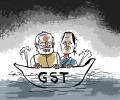
'Because of the COVID-19 pandemic situation today, the revenues of the states have gone down, the GST money is not coming and all the states combined have lost more than Rs 365,000 crore in revenue.' 'To make it worse, the Government of India is not compensating us for the shortfall, which it must as per its Constitutional obligations.'
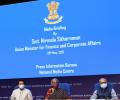
The GST Council on Friday left taxes on COVID-19 vaccines and medical supplies unchanged after the BJP- and Opposition-ruled states sparred over whether tax cut benefits will reach the common man. Congress and other Opposition ruled states have been demanding a reduction in taxes but the central government felt the move may not result in tangible gains for people. "It is one thing to rush to say - do this, it will benefit the common man. But when the technical, fitment and law committees go into the details, you realise that that could have collateral impact on many others," Finance Minister Nirmala Sitharaman said. "I am not talking about the revenue generation aspect, but how many other items will get included in it as a result of which how you are going to implement it," she added.

Penning a Facebook post on the second anniversary of GST rollout, Jaitley said as many as 20 states are already showing more than a 14 per cent increase in their revenues and do not require the Centre to compensate them for revenue loss arising out of GST implementation.

With less than five months left for the report of the Fifteenth Finance Commission to be submitted, its chairman N K Singh said the report will have fiscal road map for states, depending on their current situation.
In a move that will significantly reduce paperwork for producers of goods and services, the draft recommendations submitted by the all-states joint working group on goods and services tax (GST) have said one document will have to be filed.
Opposition MPs in India's Rajya Sabha raised concerns about US President Donald Trump's tariff threats, demanding the government clarify its response and engage in discussions with opposition parties. Leaders like P Chidambaram and Sagarika Ghose warned of potential economic repercussions, including depressed exports, lower FDI, and a significant tariff burden. The debate also touched on other issues such as the government's economic policies, demonetization, and the impact of GST on common citizens.
Wants all services included in tax, with a negative list.

For every rupee in the government coffer, the biggest pie of 66 paise will come from direct and indirect taxes, according to the Union Budget 2025-26 documents. Around 24 paise will come from borrowings and other liabilities, 9 paise from non-tax revenue like divestment, and 1 paise from non-debt capital receipts, the Budget documents said.

State finance ministers' panel to decide on latest attempt at harmonising of views on Constitution amendment.
A well-functioning GST will enhance tax compliance and boost growth: IMF

The heavy industries ministersaid that the proposal for the auto scrappage policy was ready and all stakeholders have provided inputs, therefore its announcement was likely very soon.
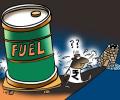
Bringing petrol, diesel and other petroleum products under the single nation-wide GST regime will reduce taxes on these products and increase the revenue of both the Centre and states, Union Minister Nitin Gadkari said on Wednesday. Finance Minister Nirmala Sitharaman will definitely try to bring petrol and diesel under GST if she gets the support of the state governments, said Gadkari while addressing the Times Now Summit virtually. "In the GST Council, finance ministers of states are also members.

Asked about the Congress's opposition to the GST Bill, Santosh Kumar Gangwar said no party opposes GST outside Parliament.

The final rate will be worked out by the GST Council, Finance Minister Arun Jaitley said on Wednesday.
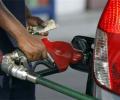
The Centre would need the concurrence of 20 states out of 29 to impose a GST on petroleum

A discussion paper by the empowered committee of state finance minister released today said taxes levied by the central government like excise, additional excise duty and various surcharges and cesses would be part of the GST.

States' demand of compensation from Centre for loss of tax revenue not on agenda.
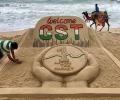
Finance Minister Arun Jaitley, who is meeting state finance ministers on Thursday to garner support for the Constitution Amendment Bill for a goods & services tax (GST), is likely to immediately dole out about Rs 13,000 crore (Rs 130 billion) in Central Sales Tax (CST) compensation to states.

GST will also make our exports more competitive and also provide a level playing field to domestic industry to compete with imports, the President said.
